

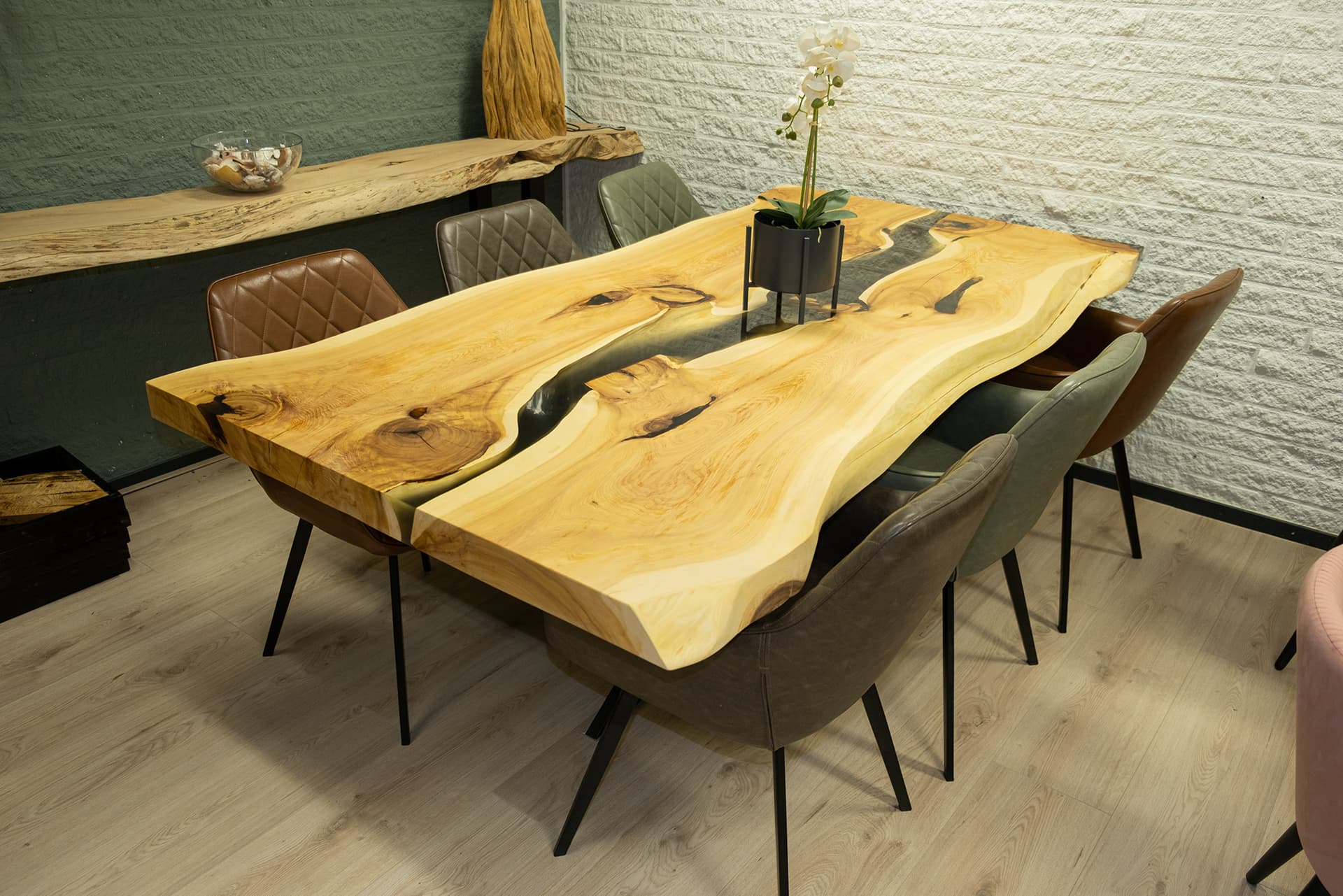
Caring for natural tables
Maintenance and care for your tabletop
For the first six months after purchase your tabletop is protected by the top coat iQonya applied. To keep that protection intact, re-oil the top once a year, more or less often depending on use. This keeps it protected against moisture and dirt. A dining table in daily use will need attention more often than, say, a sideboard top. You can carry out maintenance with the care kit available from us.
Apply a thin coat of oil to the wood with a brush, roller or cloth and let it soak in for 5 to 20 minutes. Any areas that absorb the oil quickly during that time should be treated again straight away — pay particular attention to end grain, knots and cracks. Wipe the surface with a clean, dry cotton cloth, moving to a dry part of the cloth as you go so that no oil is left standing on the surface; this stops the oil from failing to dry and turning tacky. Polish epoxy areas grease-free with a glass cloth so no traces of oil remain. The oil needs roughly 24 hours to dry, so we advise leaving the furniture unused until then, and avoiding moisture for the first few weeks.
Warning — flammable! A cloth soaked in oil must be left to dry unfolded, because drying oils can self-ignite. Once fully dry the cloths can go out with the household waste.
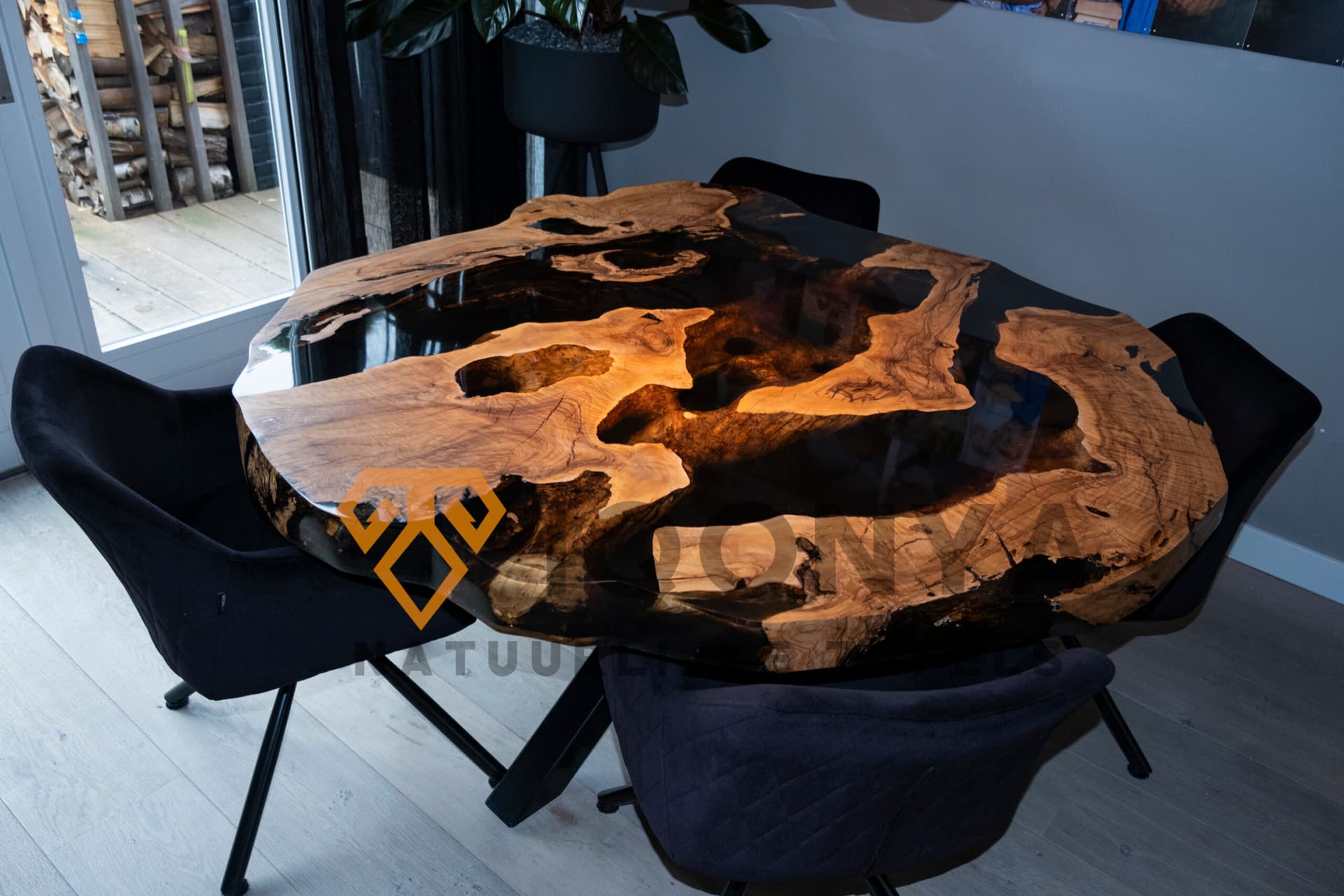
Your live edge or epoxy top is in use every day. Food residue, moisture, and above all iron, metal tins and biscuit barrels — as well as blood stains — can leave permanent dark rings or marks on an oiled top, so dry and clean the surface as quickly as you can. A soft cotton or microfibre cloth is best. Remove stains or rings as soon as possible with a damp cloth, or, if the top is really dirty, with the specially formulated mild cleaner available from us. Dry afterwards with a dry cloth. Whatever you are doing, always work in the direction of the grain. Never use aggressive or abrasive products. Beyond keeping the top clean, no further daily maintenance is needed.
Tip: if you spill something, clear it up immediately so that it does not turn sticky or bake on and have to be scraped or soaked off.
Over time, use will bring stains and rings and possibly dents and scratches — the patina of a table that is lived with. The more intensively you use the top, the sooner these appear. A natural table always asks to be treated with a little care.
Tip: to limit this, use a tablecloth, placemats and coasters under plates, cutlery, hot pans, cups and glasses, and put down a protective mat when the children are playing or doing homework at the table.
Recommended Live Edge Tables
Your Dream Table, Perfectly Custom Made
Ready to design your own unique live edge table or epoxy table? Contact us for the possibilities or plan a visit to our showroom and workshop in the Netherlands.